
Contents
- 🏠 What is Modern Architecture?
- ✨ Key Characteristics & Principles
- 🏛️ Historical Context & Evolution
- 🏗️ Notable Architects & Masterpieces
- 💡 Materials & Construction Innovations
- 🤔 Modernism vs. Postmodernism
- 🌍 Global Impact & Regional Variations
- 🌟 Why Choose Modern Design?
- Frequently Asked Questions
- Related Topics
Overview
Modern architecture, emerging in the late 19th and early 20th centuries, rejected historical styles in favor of functionalism, new materials, and mass production. Key movements like Art Nouveau, Bauhaus, and International Style emphasized clean lines, open floor plans, and a departure from ornamentation. Architects such as Frank Lloyd Wright, Le Corbusier, and Mies van der Rohe pioneered these ideas, shaping urban landscapes with innovative forms and structures. This era fundamentally altered how buildings were conceived and constructed, prioritizing utility and aesthetic simplicity. The legacy of modernism continues to influence contemporary design, though often debated for its social and environmental impacts.
🏠 What is Modern Architecture?
Modern architecture, a dominant force in 20th-century design, represents a radical departure from historical styles. Emerging between the Art Deco and Postmodern movements, it prioritized function, embraced new technologies, and stripped away ornamentation. This approach sought to create buildings that were honest in their construction and reflective of the modern age. Think of it as a deliberate break from the past, aiming for clarity, efficiency, and a new aesthetic sensibility that resonated with industrial advancements. It's less about decoration and more about form following function, a core tenet that defined its enduring legacy.
✨ Key Characteristics & Principles
At its heart, modern architecture is defined by a commitment to form follows function, where the building's purpose dictates its design. This is coupled with a strong embrace of minimalism, favoring clean lines, geometric shapes, and an absence of decorative elements. New and innovative construction technologies were central, allowing for lighter structures and open floor plans. The rejection of ornament was a conscious choice, aiming for an honest expression of materials and structure rather than superficial embellishment. This clarity of purpose and form is what gives modern buildings their distinctive, often stark, beauty.
🏛️ Historical Context & Evolution
The roots of modern architecture can be traced to the late 19th and early 20th centuries, a period of rapid industrialization and social change. Precursors like the Bauhaus school in Germany, founded in 1919, played a crucial role in synthesizing art, craft, and technology. The movement gained significant momentum through the 1920s and 1930s, with architects like Le Corbusier and Mies van der Rohe developing influential theories and designs. Post-World War II saw its widespread adoption and adaptation globally, solidifying its position as the defining architectural language of the modern era, before giving way to the critiques of postmodern architecture.
🏗️ Notable Architects & Masterpieces
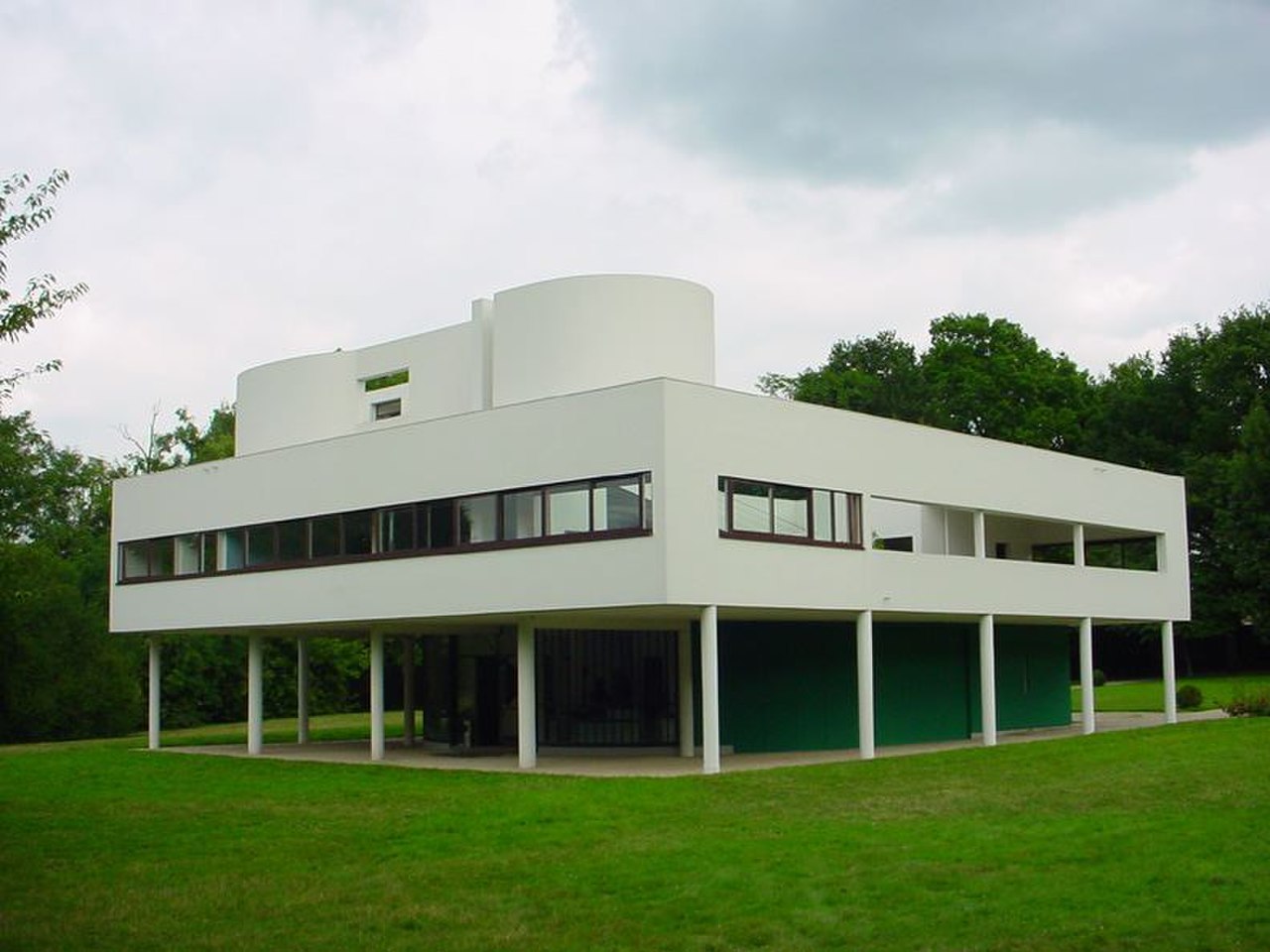
The pantheon of modern architecture includes titans whose works continue to inspire. Le Corbusier's Villa Savoye (1931) exemplifies his 'five points of architecture,' while Mies van der Rohe's Farnsworth House (1951) is a crystalline study in transparency and minimalism. Walter Gropius, founder of the Bauhaus, championed functional design in projects like the Fagus Factory (1911). Frank Lloyd Wright, though often considered a distinct path, also contributed significantly with his organic architecture, exemplified by Fallingwater (1939). These architects, among others, shaped the visual identity of the 20th century.
💡 Materials & Construction Innovations
Modern architecture's reliance on new materials and construction techniques was revolutionary. The widespread use of steel frames and reinforced concrete allowed for unprecedented structural possibilities, enabling larger spans, thinner walls, and expansive glass facades. Prefabrication and standardization of building components also became more common, speeding up construction and reducing costs. This technological embrace facilitated the open-plan layouts and cantilevered elements that are hallmarks of the style, moving away from the load-bearing masonry of earlier eras.
🤔 Modernism vs. Postmodernism
The distinction between modern and postmodern architecture is crucial. While modernism championed rationality, universality, and a rejection of historical styles, postmodernism emerged as a reaction against its perceived austerity and dogma. Postmodern architects reintroduced historical references, ornamentation, and a playful, often ironic, approach to design. Modernism sought a singular, universal style, whereas postmodernism embraced complexity, contradiction, and context. Think of the clean, geometric lines of a Mies van der Rohe building versus the colorful, eclectic forms of Robert Venturi's work.
🌍 Global Impact & Regional Variations
Modern architecture's influence is global, yet it manifests in diverse regional interpretations. In the United States, it became synonymous with the International Style, characterized by sleek skyscrapers and suburban homes. Latin America saw vibrant modernist expressions, often incorporating local materials and climate considerations, as seen in the work of Oscar Niemeyer in Brazil. European modernism, particularly in Scandinavia, often retained a warmer, more humanistic touch. These variations demonstrate how the core principles of modernism were adapted to local cultures, climates, and available resources.
🌟 Why Choose Modern Design?
Choosing modern architecture means opting for clarity, efficiency, and a timeless aesthetic. Its emphasis on natural light, open spaces, and connection to the outdoors can create highly livable and inspiring environments. The clean lines and minimalist approach reduce visual clutter, promoting a sense of calm and order. Furthermore, modern design often incorporates sustainable principles and energy-efficient technologies, making it a forward-thinking choice. If you value simplicity, functionality, and a design that speaks for itself without unnecessary embellishment, modern architecture might be your ideal fit.
Key Facts
- Year
- c. 1880s - 1960s
- Origin
- Europe and North America
- Category
- Architecture
- Type
- Movement
Frequently Asked Questions
What is the main difference between Modern Architecture and Art Deco?
Modern architecture, emerging after Art Deco, rejected ornamentation in favor of functionalism and clean lines. Art Deco, conversely, embraced decorative elements, geometric patterns, and a sense of luxury and glamour, often drawing inspiration from various historical and exotic sources. While both were prominent in the early to mid-20th century, their aesthetic philosophies are fundamentally opposed.
Is Modern Architecture still relevant today?
Absolutely. The core principles of modern architecture—functionality, minimalism, and honest material expression—remain highly relevant and influential. Many contemporary architects continue to draw from its legacy, adapting its ideas to new technologies and sustainability concerns. Its timeless aesthetic and emphasis on livability ensure its enduring appeal.
What are the 'five points of architecture' by Le Corbusier?
Le Corbusier's five points are foundational to modernist theory: 1. Pilotis (columns lifting the building off the ground), 2. Free facade (non-load-bearing walls that can be shaped freely), 3. Open floor plan (flexible interior spaces), 4. Ribbon windows (horizontal windows providing uniform light), and 5. Roof garden (utilizing the roof space for greenery). These principles were exemplified in buildings like the Villa Savoye.
How did new materials impact Modern Architecture?
New materials like steel, reinforced concrete, and large sheets of glass were transformative. They enabled architects to break free from the constraints of traditional masonry, allowing for taller buildings, larger open spaces, thinner walls, and expansive windows. This technological shift was fundamental to achieving the characteristic look and feel of modernist structures.
Are there any downsides to Modern Architecture?
Some critics point to a perceived lack of warmth or character in certain modernist designs, often due to their austerity and emphasis on industrial materials. Maintenance of large glass facades can also be costly. Additionally, early modernist buildings sometimes faced challenges with energy efficiency before modern insulation and climate control technologies were fully integrated.