
Contents
- 🌍 What Are Sedimentary Layers?
- 📍 Where to Find Them (Field Guide)
- ⛏️ How They Form: The Process Unpacked
- 📚 Types of Sedimentary Rocks
- ⏳ Dating Sedimentary Layers
- 💡 Significance in Earth Science
- 🔍 Tools for Studying Layers
- ⚠️ Safety in the Field
- 💰 Cost of Exploration (Field Trips)
- ⭐ What Geologists Say
- 🆚 Sedimentary vs. Other Rock Types
- 🚀 Your Next Steps
- Frequently Asked Questions
- Related Topics
Overview
Sedimentary layers, or strata, are the fundamental building blocks for understanding Earth's history. Formed by the accumulation and cementation of mineral or organic particles, these layers record ancient environments, climates, and life forms. Geologists analyze their composition, thickness, and sequence to reconstruct past events, from ancient riverbeds to deep ocean floors. Key principles like superposition (older layers are generally below younger ones) and cross-cutting relationships are crucial for interpretation. Studying these formations provides invaluable insights into paleontology, resource exploration, and understanding geological processes that continue to shape our planet.
🌍 What Are Sedimentary Layers?
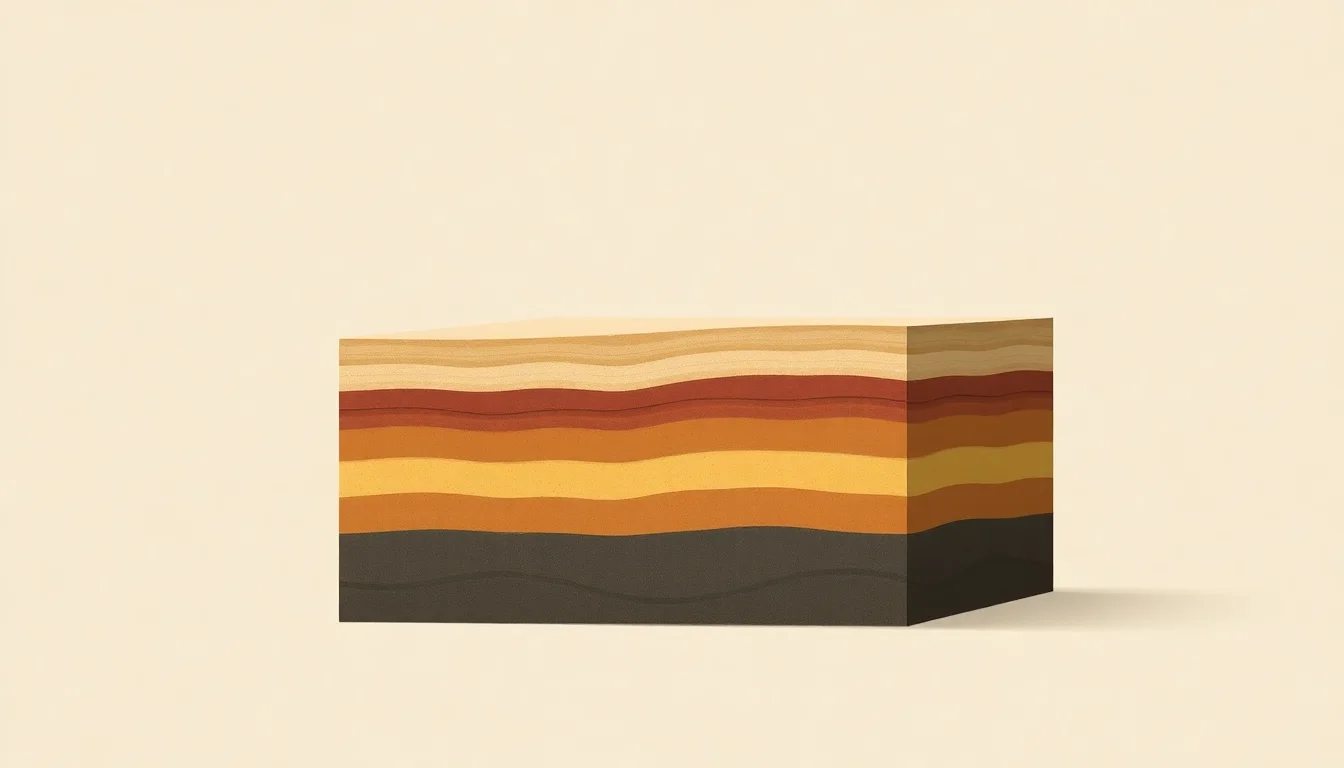
Sedimentary layers, often called strata, are fundamental to understanding Earth's history. These are distinct bands of rock, formed from accumulated sediments like sand, silt, and clay, deposited over vast periods. Think of them as pages in a geological book, each telling a story of ancient environments, climates, and life. Geologists use these layers to reconstruct past landscapes, from ancient seabeds to desert dunes. Understanding their formation is key to deciphering Earth's dynamic past.
📍 Where to Find Them (Field Guide)
You can find sedimentary layers exposed in countless locations worldwide. Look for road cuts, riverbanks, canyons, and coastal cliffs. Iconic sites like the Grand Canyon in Arizona showcase spectacular, miles-thick sequences of sedimentary rocks. Zion National Park offers stunning Navajo Sandstone formations, while the White Cliffs of Dover in England are famous for their chalk deposits. Even local quarries or construction sites can reveal fascinating, albeit less dramatic, examples of layered rocks.
⛏️ How They Form: The Process Unpacked
The formation of sedimentary layers is a multi-step process. First, weathering breaks down existing rocks into smaller pieces. These fragments, along with organic matter, are then transported by agents like water, wind, or ice – a process called erosion. Deposition occurs when these transporting agents lose energy, causing the sediment to settle. Over time, more layers accumulate, burying the older ones. Compaction squeezes out water, and cementation by minerals glues the grains together, transforming loose sediment into solid sedimentary rock.
📚 Types of Sedimentary Rocks
Sedimentary rocks are broadly classified into three main types based on their origin. Clastic rocks, like sandstone and shale, are formed from fragments of pre-existing rocks. Chemical rocks, such as limestone and rock salt, precipitate from solutions. Organic rocks, like coal and some types of limestone, form from the accumulation of organic debris. Each type provides unique clues about the depositional environment.
⏳ Dating Sedimentary Layers
Determining the age of sedimentary layers is crucial for building a geological timeline. Relative dating relies on principles like superposition (older layers are generally found below younger ones) and cross-cutting relationships. Radiometric dating, however, provides absolute ages by measuring the decay of radioactive isotopes within associated igneous rocks or sometimes within the sedimentary grains themselves. Fossils found within layers also serve as vital time markers, especially index fossils.
💡 Significance in Earth Science
The significance of sedimentary layers extends far beyond mere rock classification. They are invaluable archives of Earth's history, preserving evidence of past climates, sea levels, and tectonic activity. Fossils within these layers provide a record of the evolution of life, from the earliest microorganisms to complex organisms. Studying sedimentary structures, like ripple marks and mud cracks, reveals details about the ancient environments in which they formed. They are also critical for locating natural resources like oil and gas and groundwater.
🔍 Tools for Studying Layers
Studying sedimentary layers in the field requires specific tools. A geologist's hammer is essential for breaking off samples. A hand lens or magnifying glass helps examine grain size and texture. Field notebooks and pencils are vital for recording observations, measurements, and sketches. GPS devices or maps are needed for precise location tracking. For detailed analysis, rock saws and specialized equipment are used back in the lab.
⚠️ Safety in the Field
Fieldwork involving sedimentary layers requires adherence to safety protocols. Always inform someone of your location and expected return time. Wear appropriate personal protective equipment, including sturdy boots, a hard hat if in an area with potential rockfall, and eye protection when hammering rocks. Be aware of your surroundings; watch for unstable slopes, flash floods in canyons, and wildlife. Never enter private property without permission. Understanding the local terrain and weather conditions is paramount.
💰 Cost of Exploration (Field Trips)
The 'cost' of exploring sedimentary layers is often more about time and effort than direct expense, especially for amateur enthusiasts. Field trips to national parks may involve entrance fees and travel costs. For academic or professional research, costs can escalate with specialized equipment, lab analysis fees (which can range from tens to hundreds of dollars per sample), and travel to remote locations. However, many accessible outcrops require no more than a pair of boots and a keen eye.
⭐ What Geologists Say
Geologists widely regard sedimentary layers as Earth's primary historical record. Dr. [[William 'Bill''] Strata|William 'Bill' Strata]], a leading stratigrapher, emphasizes that 'each layer is a snapshot, and the sequence is the movie.' The principle of superposition, first articulated by Nicolaus Steno in the 17th century, remains a cornerstone of geological interpretation. Debates often center on the precise environmental interpretations of specific formations and the correlation of layers across vast distances.
🆚 Sedimentary vs. Other Rock Types
While igneous rocks (formed from molten material) and metamorphic rocks (transformed by heat and pressure) offer insights into Earth's internal processes, sedimentary rocks are unparalleled for recording surface conditions and the history of life. Igneous intrusions can cut through sedimentary layers, providing key dating points, while metamorphic processes can obscure or alter original sedimentary features. Sedimentary rocks are the primary hosts for fossils and economic deposits like coal and petroleum.
🚀 Your Next Steps
Ready to explore Earth's history firsthand? Start by visiting a local park or road cut with visible rock layers. Familiarize yourself with basic geological principles like superposition. Consider joining a local geology club or taking an introductory geology course. For serious study, plan a trip to a well-known geological site like the Grand Canyon or contact a university geology department for research opportunities. The story of our planet awaits discovery in its layers.
Key Facts
- Year
- -4000000000
- Origin
- Earth's Crust Formation
- Category
- Geology
- Type
- Topic
Frequently Asked Questions
What is the difference between sediment and sedimentary rock?
Sediment refers to the loose, unconsolidated particles (like sand, silt, or gravel) that have been transported and deposited. Sedimentary rock, on the other hand, is formed when these sediments are compacted and cemented together over geological time, becoming solid rock. Think of sand on a beach as sediment, and sandstone as the rock formed from that sand.
How do geologists know the age of sedimentary layers?
Geologists use two main methods: relative dating and absolute dating. Relative dating uses principles like superposition (older layers are below younger ones) and the presence of index fossils. Absolute dating, often using radiometric techniques on associated igneous rocks, provides numerical ages in years. Fossils within the layers are crucial for both methods.
Can all sedimentary layers contain fossils?
No, not all sedimentary layers contain fossils. Fossilization requires specific conditions, such as rapid burial in sediment to protect the organism from decay and scavengers. While many sedimentary rocks are fossiliferous, especially those formed in marine environments, some layers may form in conditions unsuitable for preservation, or the original organic material may have been completely destroyed.
What are the most common types of sedimentary rocks?
The most common types are clastic rocks, formed from rock fragments. These include shale (made of clay and silt), sandstone (made of sand grains), and conglomerate (made of rounded pebbles and cobbles). Limestone, a chemical or organic sedimentary rock, is also very abundant, often forming in marine environments.
Why are sedimentary layers important for finding oil and gas?
Sedimentary basins are the primary locations for oil and gas reservoirs. Porous sedimentary rocks, like sandstone, can act as 'reservoirs' to hold oil and gas. Impermeable layers above them, often shale or salt, act as 'caps' or 'seals' that prevent the hydrocarbons from escaping. The geological history recorded in these layers helps geologists predict where these resources might be trapped.
What is 'stratigraphy'?
Stratigraphy is the branch of geology concerned with the study of rock layers (strata) and layering (stratification). It involves describing the characteristics of sedimentary layers, their thickness, their composition, and their relationships to each other. Stratigraphy is essential for understanding the geological history of a region and for correlating rock units across different locations.