
Contents
Overview
The genesis of sewing machine operation can be traced back to the late 18th century, with Englishman Thomas Saint patenting a design in 1790 for a machine intended to stitch leather. However, it was the 19th century that truly saw the mechanization of sewing take flight. Barthélemy Thimonnier developed a chain-stitch machine in France around 1830, initially for military uniforms, though his workshop was reportedly destroyed by fears of job displacement. The breakthrough for widespread adoption came with Elias Howe's 1846 patent for a machine using a lockstitch mechanism, featuring a needle with an eye at the point and a shuttle beneath the fabric. This design, though initially met with resistance and patent disputes, formed the basis for future innovations. Companies like Singer Corporation, founded by Isaac Singer and Edward Clark in 1851, rapidly commercialized and improved upon these designs, introducing treadle-powered machines that freed up both hands for fabric manipulation, dramatically increasing operational efficiency.
⚙️ How It Works
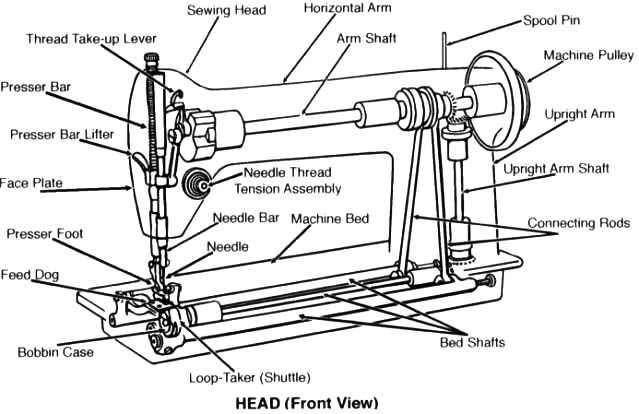
At its core, sewing machine operation relies on the synchronized movement of several key components to create a stitch. The needle, driven by a motor or manual power, carries the upper thread through the fabric. Beneath the fabric, a bobbin or rotary hook mechanism catches the needle thread and interlaces it with a lower thread, forming a lockstitch or a chain stitch, depending on the machine's design. The feed dog mechanism, a set of small teeth, grips the fabric and moves it incrementally forward with each needle cycle, allowing for continuous stitching. Tension discs control the tightness of both the upper and lower threads, ensuring a balanced and secure stitch. Modern machines often automate these functions with electronic controls, allowing users to select stitch types, lengths, and widths via digital interfaces or control panels, moving beyond the purely mechanical operation of earlier models.
📊 Key Facts & Numbers
The impact of sewing machines on productivity is staggering. Early industrial machines could produce up to 2,000 stitches per minute, a monumental leap from the estimated 30 stitches per minute achievable by hand. By 1900, over 20 million Singer sewing machines had been sold worldwide. The global sewing machine market was valued at approximately $7.5 billion in 2023 and is projected to reach over $10 billion by 2030, indicating sustained demand for both industrial and domestic units. The average home sewer might use their machine for 5-10 hours per week, while an industrial operator in a garment factory could run a machine for 40+ hours weekly, producing hundreds of garments. The cost of a basic home sewing machine can range from $100 to $500, while high-end industrial machines can cost upwards of $5,000.
👥 Key People & Organizations
Several individuals and organizations have been pivotal in the evolution of sewing machine operation. Elias Howe's foundational patent for the lockstitch machine in 1846 was a critical turning point, though he faced significant legal battles over patent infringement with competitors. Isaac Singer, alongside Edward Clark, founded the Singer Corporation in 1851, which became synonymous with sewing machines due to its aggressive marketing, innovative treadle designs, and accessible financing. Willcox & Gibbs also contributed significantly with their high-speed single-thread chainstitch machine, favored for its speed and ability to sew through multiple layers of fabric. Today, companies like Brother Industries, Janome, and Juki Corporation are major players, driving innovation in both domestic and industrial machine operation through advanced electronic controls and specialized features.
🌍 Cultural Impact & Influence
Sewing machine operation has profoundly reshaped global economies and cultural practices. The mechanization of sewing was a cornerstone of the first Industrial Revolution, enabling mass production of clothing and textiles, which in turn made garments more affordable and accessible to the general populace. This shift contributed to the rise of the fast fashion industry and altered labor dynamics, creating new factory jobs, predominantly for women. For home users, sewing machines democratized garment creation, allowing individuals to mend, alter, and create clothing, fostering a culture of DIY and personal expression through textiles. The operation of these machines became a widely taught skill in schools and homes, embedding a practical understanding of mechanical processes into everyday life for millions.
⚡ Current State & Latest Developments
The current state of sewing machine operation is characterized by increasing digitalization and automation. Many modern machines feature touchscreen interfaces, built-in CAD software for pattern creation, and automated thread cutters. Embroidery machines and quilting machines have become increasingly sophisticated, offering complex stitch patterns and automated design execution. The integration of IoT technology is also emerging, allowing machines to connect to Wi-Fi for software updates, pattern downloads, and remote diagnostics. For industrial operations, robotic sewing systems and advanced 3D printing techniques for textiles are being explored to further streamline production and enable novel garment construction methods.
🤔 Controversies & Debates
Debates surrounding sewing machine operation often center on the impact of automation on human labor and the environmental footprint of textile production. Critics argue that increasingly automated industrial sewing machines displace human workers, particularly in developing countries where garment manufacturing is a primary source of employment. The efficiency gains, while beneficial for production volume, can also contribute to the unsustainable practices of fast fashion, leading to increased textile waste. Furthermore, discussions arise regarding the obsolescence of older, mechanically simpler machines versus the energy consumption and electronic waste generated by complex, digitally-driven models. The debate also touches upon the preservation of traditional sewing skills versus the adoption of new technologies.
🔮 Future Outlook & Predictions
The future of sewing machine operation points towards even greater integration of artificial intelligence and robotics. We can anticipate machines capable of recognizing fabric types and automatically adjusting stitch parameters for optimal results, or even machines that can interpret complex 3D body scans to custom-fit garments. Robotic sewing is expected to become more prevalent in industrial settings, handling intricate tasks like attaching sleeves or collars with greater precision and speed than human operators. The development of new, sustainable materials may also require novel operational approaches, pushing the boundaries of what current machines can achieve. The line between domestic and industrial operation may blur further, with high-end home machines offering capabilities previously exclusive to factories.
💡 Practical Applications
Sewing machine operation has a vast array of practical applications. In the domestic sphere, it's used for garment repair, alteration, and the creation of custom clothing, home décor items like curtains and upholstery, and craft projects. Industrially, sewing machines are fundamental to the apparel industry, producing everything from everyday clothing to high-fashion garments, as well as in the manufacturing of automotive interiors, aerospace components, tents, sails, and medical textiles. Specialized machines are employed for tasks like denim production, leatherworking, and upholstery, each requiring specific operational techniques and machine configurations. The precise operation of a sewing machine is critical for product du
Key Facts
- Category
- technology
- Type
- topic