Whale Watching Tours | GAI God Me
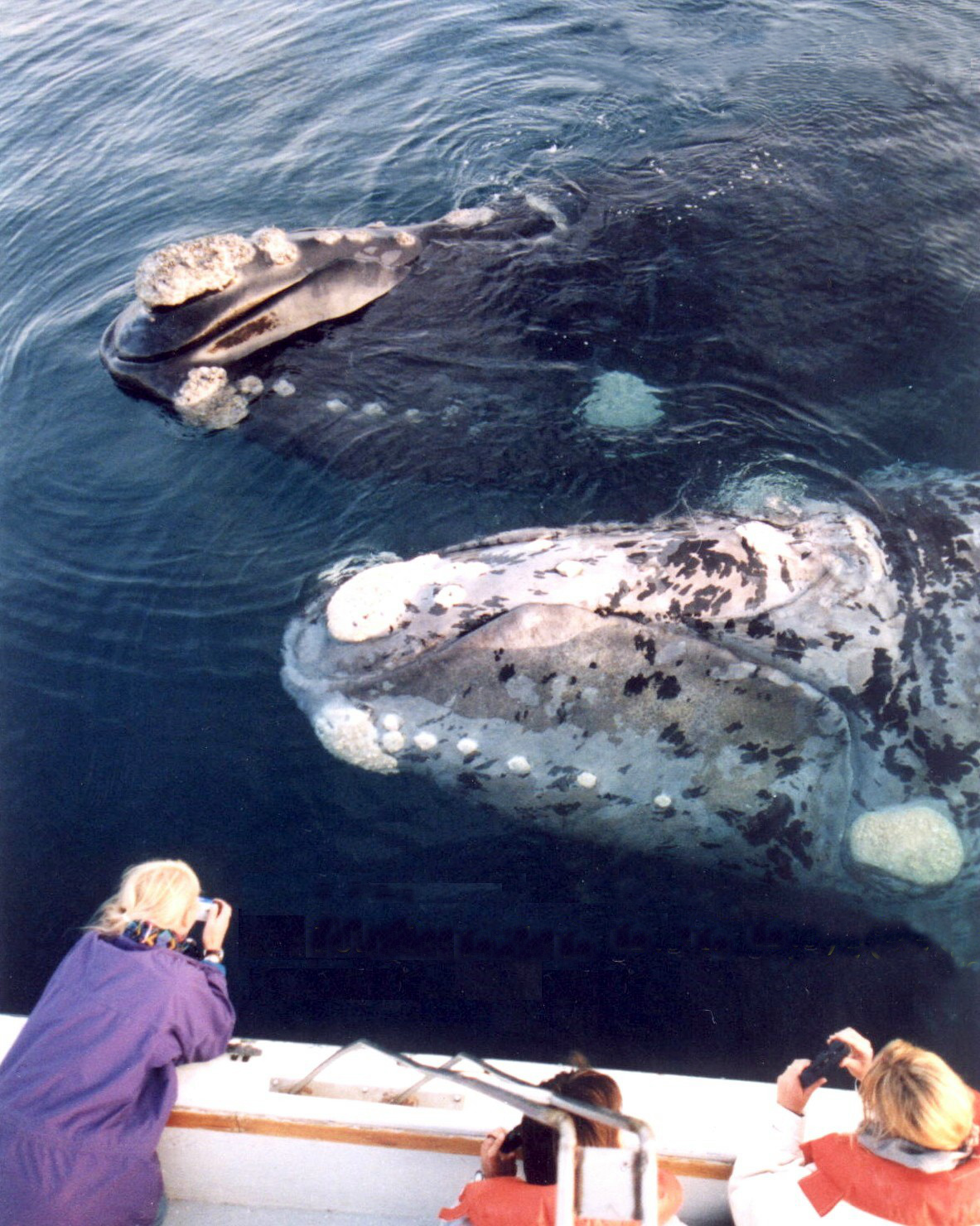
Whale watching tours offer a unique opportunity for the public to observe cetaceans—whales, dolphins, and porpoises—in their natural marine environments. This…
Contents
Overview
The practice of observing whales in their natural habitat has ancient roots, with indigenous cultures worldwide holding deep connections to these marine mammals through storytelling and spiritual practices. Early tours were often informal, operating from small boats with limited infrastructure. Key locations like [[Monterey Bay|Monterey Bay]], California, and [[Baja California|Baja California]], Mexico, became early hubs, capitalizing on predictable whale migration patterns. The establishment of organizations like the [[International Fund for Animal Welfare|International Fund for Animal Welfare (IFAW)]] and the [[Whale and Dolphin Conservation|Whale and Dolphin Conservation (WDC)]] in the late 20th century helped formalize ethical guidelines and promote responsible practices, shifting the focus from mere observation to conservation-driven tourism.
⚙️ How It Works
A typical whale watching tour involves boarding a specialized vessel, often a boat or catamaran designed for stability and viewing, operated by experienced captains and naturalists. Routes are determined by known whale migration paths, feeding grounds, or breeding areas, with destinations like the [[Svalbard|Svalbard archipelago]] for [[minke whales|minke whales]] or [[Hermanus|Hermanus]], South Africa, for [[southern right whales|southern right whales]]. Naturalists onboard provide commentary on the species encountered, their behavior, and the marine ecosystem, often using hydrophones to listen to whale vocalizations. Tour operators adhere to strict guidelines regarding approach distances and speeds to minimize disturbance to the animals, a practice codified by organizations like the [[Pacific Whale Watch Association|Pacific Whale Watch Association]]. The success of a tour relies on factors like seasonality, local whale populations, and weather conditions, with sightings ranging from brief surface appearances to extended periods of feeding or breaching.
📊 Key Facts & Numbers
Icelandic whale watching tours can account for a substantial portion of local tourism income, with Reykjavik and Húsavík being major departure points. The [[Humpback whale|humpback whale]] is a prime target for tours in locations such as [[Maui, Hawaii|Maui, Hawaii]].
👥 Key People & Organizations
Numerous organizations and individuals have shaped the whale watching industry. The [[International Whaling Commission (IWC)|International Whaling Commission (IWC)]], while primarily focused on regulating whaling, also plays a role in setting guidelines for whale watching. Conservation groups like the [[Marine Mammal Conservancy|Marine Mammal Conservancy]] and [[Ocean Conservancy|Ocean Conservancy]] advocate for responsible tourism practices and marine mammal protection. Pioneering researchers such as [[Roger Payne|Roger Payne]], known for his work on whale songs, and [[Sylvia Earle|Sylvia Earle]], a renowned marine biologist, have inspired public interest and scientific study that underpins many tours. Commercial operators, like [[G Adventures|G Adventures]] and [[Lindblad Expeditions|Lindblad Expeditions]], offer specialized wildlife tours that often include whale watching as a key component, working with local guides and conservationists.
🌍 Cultural Impact & Influence
Whale watching tours have profoundly influenced public perception and engagement with marine conservation. By providing direct encounters with these magnificent creatures, tours foster a sense of wonder and connection, often translating into increased support for conservation initiatives and policy changes. The visual evidence of whale behavior, from breaching to calf-rearing, captured on these tours, has been instrumental in public education campaigns and documentaries. This direct experience can significantly shift attitudes, moving individuals from passive concern to active advocacy for ocean health and the protection of [[cetaceans|cetaceans]]. The economic viability demonstrated by successful whale watching operations has also provided a compelling argument for the preservation of whale populations as valuable natural resources, influencing regional economic development and conservation strategies in coastal communities worldwide.
⚡ Current State & Latest Developments
The whale watching industry is currently experiencing a surge in demand, driven by increased global travel and a growing public interest in ecotourism and wildlife experiences. Many operators are investing in more sustainable technologies, such as hybrid or electric-powered vessels, to reduce their environmental footprint. There's a growing emphasis on educational components, with tours increasingly incorporating citizen science elements, allowing participants to contribute to data collection on whale sightings, behavior, and environmental conditions. Companies are also developing virtual reality and augmented reality experiences to supplement or even precede physical tours, offering accessible ways to learn about whales. Regulatory bodies are continuously refining guidelines for responsible interaction, particularly in areas with high concentrations of sensitive species like [[vaquita|vaquita]] or [[North Atlantic right whale|North Atlantic right whales]], adapting to new research on whale stress responses.
🤔 Controversies & Debates
The primary controversy surrounding whale watching tours centers on the potential impact of human presence on whale behavior and well-being. The debate over optimal approach distances and speeds remains contentious, with different regions and species requiring varying levels of protection. Furthermore, the economic benefits are not always evenly distributed, with some local communities benefiting less than large international tour operators. There's also a philosophical debate about the ethics of 'consuming' wildlife experiences, with some arguing that any form of commercialized observation inherently commodifies and potentially exploits animals, regardless of the intent.
🔮 Future Outlook & Predictions
The future of whale watching tours is likely to be shaped by advancements in sustainable technology and a deeper integration of conservation science. Expect to see more tours utilizing [[unmanned aerial vehicles|drones]] for observation from a greater distance, and a wider adoption of silent, emission-free vessels. The role of citizen science will likely expand, with tours becoming mobile research platforms contributing to long-term population monitoring and health assessments. There's also potential for virtual and augmented reality to play a larger role, offering immersive experiences that require minimal physical impact. However, the industry must navigate increasing regulatory scrutiny and public demand for verifiable ethical and environmental standards, particularly as climate change impacts whale distribution and migration patterns, posing new challenges for tour operators.
💡 Practical Applications
Whale watching tours serve multiple practical applications beyond recreation. They are invaluable tools for marine biology research, providing platforms for scientists to conduct population surveys, tag whales, collect genetic samples, and study feeding and social behaviors. The data collected by tour operators and participants contributes significantly to conservation efforts, informing policy decisions and identifying critical habitats that require protection. Educational programs utilize these tours to teach students about marine ecosystems, conservation challenges, and the importance of biodiversity. For local economies, whale watching tours represent a sustainable altern
Key Facts
- Category
- culture
- Type
- topic